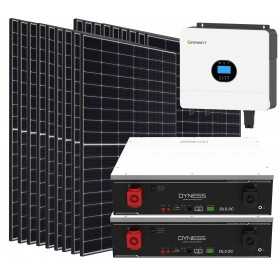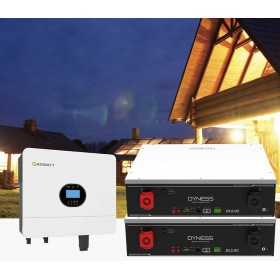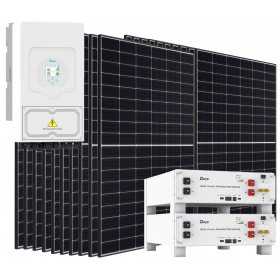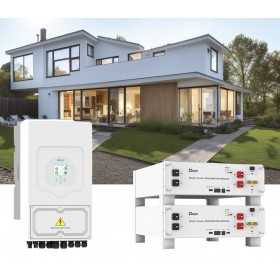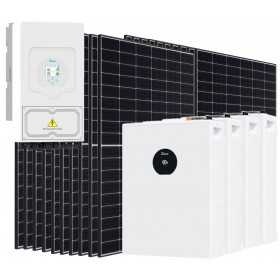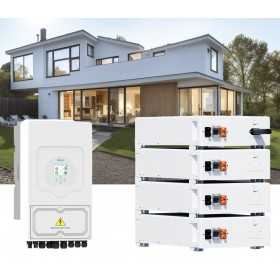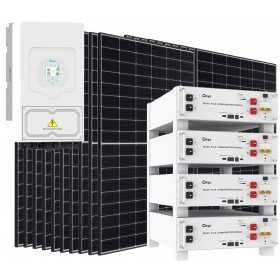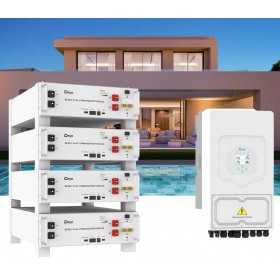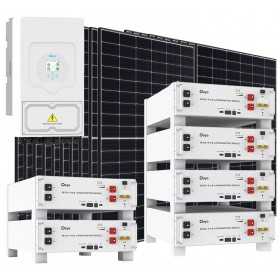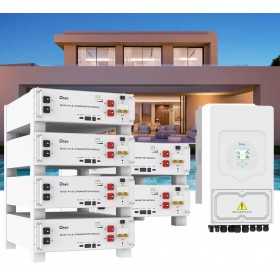
Reference: N151020012
Brand: TopSolar
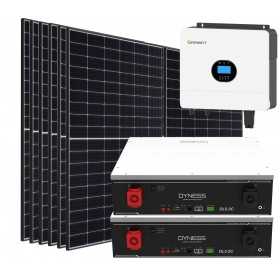
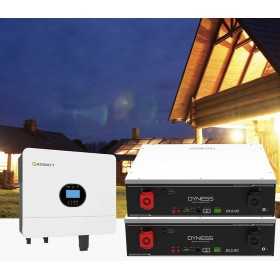
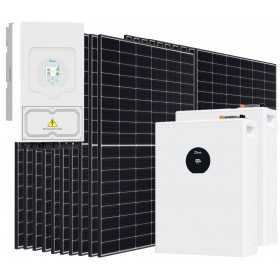
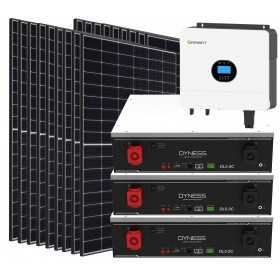
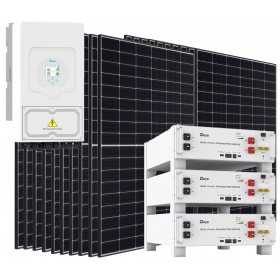
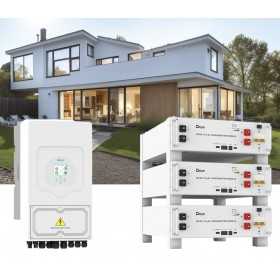
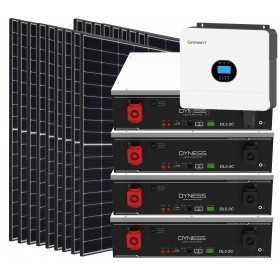
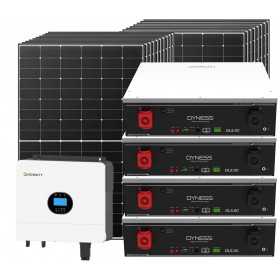
An off-grid solar system, also known as a stand-alone or island system, is a power generation solution that operates completely independently from the public electricity grid. Unlike an on-grid system, it does not rely on the utility network. Instead, it combines solar panels, an off-grid inverter, and a battery storage system to supply electricity even when there is no grid connection.
The key difference between an on-grid and an off-grid system is that the former is connected to the utility grid, while the latter is entirely self-sufficient. During the day, the electricity generated by the solar panels powers the connected loads, while any excess energy is stored in the batteries for use at night or during periods of low solar production.
The decision depends primarily on the installation location and the required level of energy independence. An off-grid solar system is the ideal solution for remote homes without grid access, mountain cabins, agricultural buildings, remote facilities, boats, motorhomes, and other locations where connecting to the public grid is impractical or too expensive.
For properties that already have access to the electrical grid, the decision should instead focus on whether complete energy independence or backup power during outages is the main objective. In these cases, a hybrid solar system with battery storage is often a more suitable choice than a fully off-grid installation.
There is no standard size for an off-grid solar kit. Battery storage capacity can range, for example, from 10.24 kWh to 30.72 kWh, while residential off-grid inverters typically provide between 6 kW and 9 kW of continuous power.
The most important factor is proper system sizing, which depends on:
A 5–10 kWp solar array may be sufficient for moderate household consumption, while 10–20 kWp systems are recommended for higher or continuous electrical loads.
The main distinction between on-grid and off-grid systems lies in how they manage power generation, storage, and energy supply. On-grid systems operate alongside the public electricity network, while off-grid systems function entirely independently.
Hybrid systems combine battery storage with a grid connection, allowing automatic switching or backup operation depending on the system design.
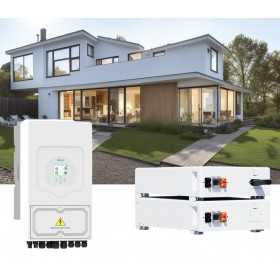
TopSolar organises its product range according to real installation requirements. Hybrid systems are particularly suitable for properties connected to the grid that also require battery storage, backup capability, and future expandability.
An off-grid solar system continues to operate even when the public electricity grid is unavailable because it does not rely on it.
However, total autonomy depends on several factors:
For example, a 10 kWh battery will provide significantly longer backup time for an average 1 kW load than for a 3 kW load. The most important consideration is the household's consumption profile, especially during evenings, overnight, and extended periods of poor weather.
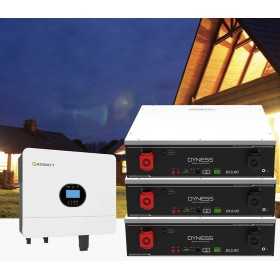
The off-grid inverter converts the DC electricity generated by the solar panels into AC power while maintaining a stable electrical supply without assistance from the public grid.
Similarly, the solar charge controller manages battery charging and maximises energy production. MPPT charge controllers generally deliver higher efficiency than PWM controllers, particularly in larger photovoltaic arrays or systems operating at higher string voltages.
Residential off-grid systems commonly use 6,000 W to 9,000 W inverters combined with 48 V battery banks. The correct inverter size should be selected according to:
An off-grid solar system can significantly reduce energy costs in locations where connecting to the electricity grid is expensive or where diesel generators would otherwise be required.
In remote installations, the financial comparison should include not only electricity bills but also grid connection costs, fuel expenses, and generator maintenance.
From an environmental perspective, using solar energy directly reduces fossil fuel consumption and associated carbon emissions.
The return on investment varies depending on:
Selecting the most suitable off-grid solution begins with a few key technical parameters:
Compact systems are often sufficient for seasonal or mobile applications, while remote homes require systems specifically sized according to actual energy consumption and the desired level of autonomy.
TopSolar organises its product range based on practical applications rather than simply offering a wide selection. Before choosing a system, it is essential to evaluate three key factors:
There are 12 products.
Reference: N151020012
Brand: TopSolar
Reference: N151020011
Brand: TopSolar
Reference: N151020010
Brand: TopSolar
Reference: N151020008
Brand: TopSolar
Reference: N151020005
Brand: TopSolar
Reference: N151020004
Brand: TopSolar
Reference: N151020003
Brand: TopSolar
Reference: N151020002
Brand: TopSolar
Reference: N151020001
Brand: TopSolar
Reference: N151020000
Brand: TopSolar
Reference: ULULT3800EU
Brand: Ultimatron France
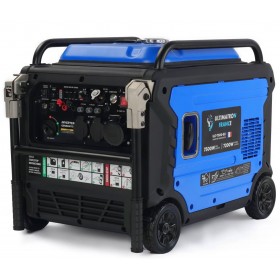
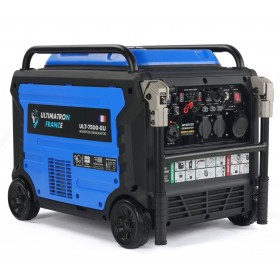
Reference: ULULT7500EU
Brand: Ultimatron France
check_circle
check_circle